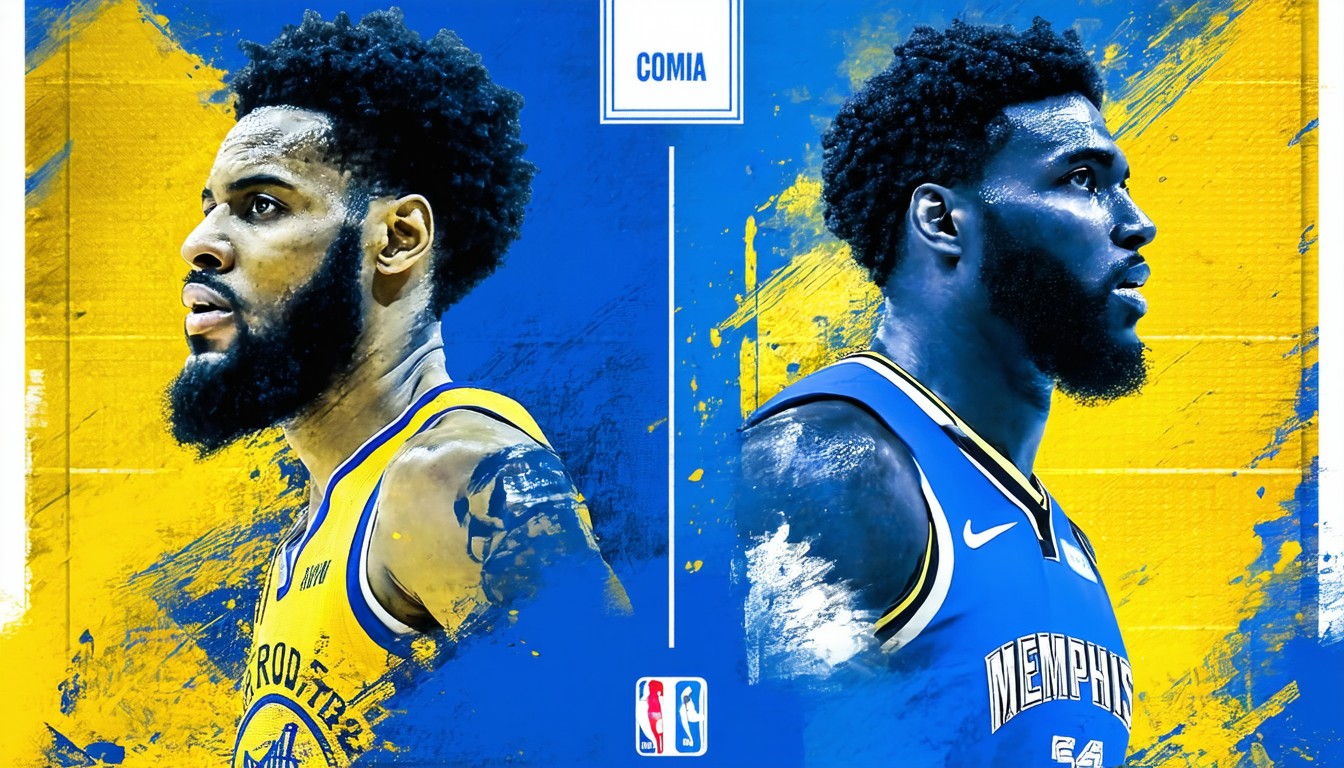
Few rivalries in modern NBA capture the energy and drama quite like the Golden State Warriors versus the Memphis Grizzlies. Their recent matchups, especially those in high-pressure playoff or playoff-implicating settings, have become essential viewing for basketball enthusiasts—and are a masterclass in both star power and tactical adaptability. A nuanced look at the player stats from these games reveals not just who shines individually, but also how each team’s overall identity is shaped by their roster contributions.
Spotlight on Team Dynamics
The Warriors are known for a free-flowing, three-point heavy offense led by the likes of Stephen Curry and Klay Thompson. Their system prizes ball movement and quick decision-making. The Grizzlies, in contrast, have carved out a reputation as one of the NBA’s feistiest defensive squads. Anchored by Ja Morant’s electrifying play and Jaren Jackson Jr.’s defensive instincts, Memphis thrives on forcing turnovers and capitalizing in transition.
Key Players: Standout Performances and Statistical Leaders
Delving into recent Warriors vs Grizzlies clashes, several names consistently populate the stat sheets. For Golden State, Stephen Curry remains the engine of the offense:
- Stephen Curry: Often leading the team in points, Curry demonstrates efficiency with high shooting percentages from beyond the arc and generates gravity that spaces the floor for teammates.
- Klay Thompson: When hot, Thompson contributes lethal perimeter shooting and defensive range.
- Draymond Green: Typically central to assists and rebounds, Green’s all-court impact rarely translates to headline-making point totals, but his defensive plus-minus routinely stands out.
For Memphis, the storylines are similar but distinct:
- Ja Morant: More than just a scorer, Morant’s assists and highlight-reel plays lift team momentum.
- Jaren Jackson Jr.: Frequently leads in blocks and contests, dominating the paint defensively.
- Desmond Bane: Provides crucial scoring from the wing and secondary playmaking.
In a recent matchup, Curry tallied close to 30 points with a mix of acrobatic drives and deep threes, while Ja Morant responded with an efficient double-double, demonstrating his dual-threat capabilities.
Breaking Down the Stats: Offense Versus Defense
Warriors’ Offensive Fluidity
Golden State’s offensive identity is rooted in movement and unselfishness. In the most recent game, the Warriors had an assist percentage north of 60%, showing team-wide involvement. Their three-point attempts often outpace league average, and the bulk of these come from Curry and Thompson.
“When you look at the Warriors’ shot chart, it’s clear their offense is predicated on spacing and pace. Their willingness to shoot from deep tests our defense every possession,” a Western Conference assistant coach recently noted.
Grizzlies’ Defensive Tenacity
On the flip side, the Grizzlies shine defensively. In head-to-head stats, Memphis holds Golden State below its season average in points per game in several matchups. The Grizzlies’ forced turnover rate often spikes, with players like Jackson Jr. and Dillon Brooks disrupting passing lanes and contesting shots.
Real-World Context: Momentum Plays and Game-Altering Moments
While box scores offer a macro perspective, isolated statistical surges often decide these games. For instance, in a pivotal contest last season, Jaren Jackson Jr. blocked a potential game-winner from Curry in the final seconds, sealing victory for the Grizzlies. Meanwhile, Curry’s 40-point performance in a separate matchup resulted in a tight Golden State win, underscoring the high stakes and razor-thin margins that define this rivalry.
Adjustments and X-Factors
Beyond headline stars, role players frequently emerge as game-changers. Gary Payton II’s defensive coverage on Morant, or Tyus Jones’ calm distribution in Morant’s absence, have tilted momentum at key junctures. Kevon Looney’s offensive rebounding and Steven Adams’ interior screens often swing extra possessions.
The reliable presence of veteran leadership on both sides—think Draymond Green or Steven Adams—brings discipline that proves invaluable when games tighten in the fourth quarter.
Advanced Stats: What the Analytics Reveal
Advanced metrics further enrich the analysis:
- Effective Field Goal Percentage (eFG%): The Warriors routinely post a high eFG% thanks to their three-point volume.
- Defensive Rating: Memphis often cracks the league’s top 10, leveraging steals and blocks to fuel transition offense.
- On/Off Splits: The Grizzlies’ net rating dips considerably when Morant is off the floor, while the Warriors’ bench support enables them to weather stretches without Curry more effectively.
Beyond team-wide metrics, individual analytics such as Player Efficiency Rating (PER), true shooting percentage, and box plus-minus add clarity. Statistically, Curry and Morant both boast top-tier PERs against one another, but big men like Jackson Jr. and Green usually excel in defensive box plus-minus.
Trends and Takeaways: What Recent Games Suggest
A closer examination of box scores highlights several key patterns:
- The Warriors thrive in transition but can struggle with turnovers against elite defenses like Memphis.
- Memphis leverages offensive rebounding and second-chance points, frequently outpacing Golden State in this category.
- Both teams regularly rely on big fourth quarters from stars—momentum is often decided in the final five minutes.
The Importance of Coaching and Adjustments
Both Steve Kerr and Taylor Jenkins are lauded for in-game adaptability. Kerr has leaned into lineup versatility, deploying small-ball or size-based combinations as needed. Jenkins, on the other hand, maximizes defensive switches and isn’t afraid to trust young players in big moments.
“Coach Jenkins’ willingness to experiment and trust his depth has been a revelation for the Grizzlies,” notes one league analyst. “It’s turned Memphis into one of the league’s deepest, most unpredictable playoff opponents.”
Conclusion
The statistical battle between the Golden State Warriors and Memphis Grizzlies is a chess match of strategy, athleticism, and adaptability. Player stats do more than fill box scores—they highlight evolving tactics, unheralded contributions, and the razor-thin difference between victory and defeat. As both teams eye deeper playoff runs, advanced statistics and standout individual performances will remain at the heart of their rivalry’s next chapter.
FAQs
What are the key player stats to watch in Warriors vs Grizzlies games?
Points, assists, rebounds, steals, and blocks for stars like Steph Curry, Ja Morant, Jaren Jackson Jr., and Draymond Green usually shape the storylines. Role-player contributions and efficiency stats also matter.
How do advanced analytics impact the Warriors-Grizzlies rivalry?
Metrics like effective field goal percentage and defensive rating provide deeper insight into each team’s strengths and expose matchups that could decide the outcome.
Which player typically leads the Warriors in scoring against Memphis?
Stephen Curry is most often the Warriors’ leading scorer in matchups with the Grizzlies, using his shooting range and ability to create offense in tight situations.
Has Ja Morant’s presence made a statistical difference in these matchups?
Absolutely—Morant’s scoring, facilitation, and energy lift the Grizzlies, and his absence is usually reflected in drops to the team’s offensive output.
What trends have emerged from recent head-to-head games?
Tight defensive battles, strong fourth-quarter performances from star players, and the impact of role players have all become defining trends in their recent matchups.
How do coaching adjustments show up in the player stats?
Lineup versatility, defensive switches, and changes in playing pace—often decided by the coaching staff—lead to visible shifts in player minutes and efficiency, especially in critical game stretches.
