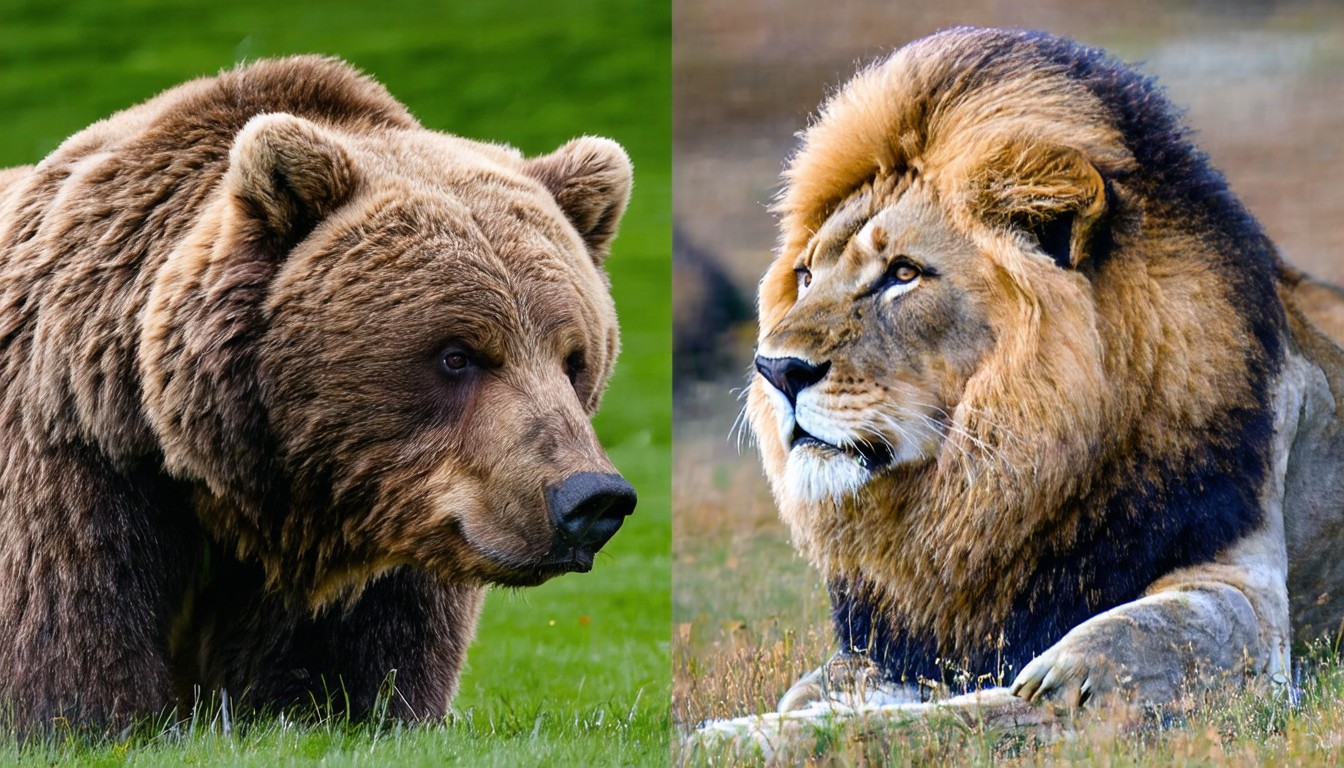
From ancient folklore to modern wildlife documentaries, the debate over “bears vs lions” has fascinated animal enthusiasts and concerned ecologists alike. These apex predators represent the pinnacle of power within their respective habitats: the majestic bear dominating diverse northern territories, and the regal lion commanding the vast African savannah. Despite their separation by continents, both animals inspire awe—and the hypothetical question remains: if a bear and a lion were to face off, who would emerge victorious? Beyond the spectacle, this analysis reveals the stark contrasts in their biology, habitats, behaviors, and combat prowess.
Key Biological and Physical Differences
Size and Physical Build: Who Has the Advantage?
Bears and lions stand apart in their physical makeup—a critical factor in any confrontation. Adult male lions typically weigh between 330 and 500 pounds (150–227 kg), while standing about 4 feet tall at the shoulder. Their bodies, built for bursts of speed and group tactics, are muscular yet streamlined.
In contrast, adult male bears display much more size variation across species. The massive Kodiak and polar bears, among the largest terrestrial carnivores, often exceed 900 pounds (408 kg), with exceptional individuals topping 1,500 pounds (680 kg) and measuring over 5 feet at the shoulder when standing on all fours. Even smaller bear species, such as the American black bear, generally outweigh most lions.
“A male grizzly or polar bear outweighs an adult male lion by several hundred pounds, with a skeletal structure and muscle mass adapted for both brute strength and endurance. In terms of raw physical power, the bear holds the edge.”
– Dr. Craig Saffoe, Curator of Mammals, Smithsonian National Zoo
Weaponry: Teeth and Claws
Both predators possess formidable arsenals. Lions have powerful jaws armed with 3-inch canine teeth designed to pierce vital organs and suffocate prey. Their sharp retractable claws, used primarily for grappling and dispatching struggling animals, are integral to their hunting success.
Bears, however, wield claws that can exceed 4 inches (10 cm) in length. Unlike a lion’s retractable claws, bear claws are always extended, making them exceptional tools for digging, ripping, or swatting. A single swipe from a large bear carries the force to break bones or disable an adversary.
Speed and Agility
Lions excel in short-burst speed, reaching up to 50 mph (80 km/h) for brief chases—an adaptation to hunting fleet-footed herbivores. Their agility is honed for teamwork and powered leaps as part of a pride’s strategy.
Most bear species, despite their size, can reach speeds of 30–35 mph (48–56 km/h), but lack the feline agility and stamina for long chases. Instead, their movement is about brute force over finesse.
Social Structure and Behavioral Adaptations
The Lion’s Teamwork vs. The Bear’s Solitude
One of the most fundamental differences between bears and lions revolves around their social lifestyles. Lions are the only truly social cats, living in prides where coordinated hunting and defense are central. This social structure aids in subduing large prey and warding off threats like rival prides or hyenas.
By contrast, bears are solitary by nature, especially the large brown and polar bears. With the exception of mothers with cubs or brief communal feeding events (like salmon runs), bears rely entirely on individual strength and survival skills.
Hunting Styles and Diet
Lions are obligate carnivores, relying almost solely on large herbivores such as zebras, antelope, and buffalo. Their hunting employs cooperation, stealth, and sudden assault.
Bears are omnivorous with widely varied diets: fruits, roots, insects, fish, and, when available, meat. Certain bears—like polar bears—are more carnivorous, targeting large mammals like seals. Their hunting is opportunistic and less reliant on pursuit.
Geographic Distribution and Environmental Influences
Bears occupy northern and temperate zones across North America, Europe, and Asia, while lions are native to African savannahs (with a now-fragmented Asiatic population in India). Their environments shape their behaviors and adaptations:
- Lions: Open grasslands, requiring speed, camouflage, and social organization.
- Bears: Forests, tundra, and coastal regions, necessitating adaptability, brute strength, and resourcefulness.
Notably, these differences mean wild encounters are essentially impossible in nature, but the ecological pressures each faces are profound: habitat loss, poaching, and climate change affect both, though in distinct ways.
Real-World Scenarios: “Who Would Win?” in Historical and Modern Context
Analyzing Potential Outcomes
The notion of a face-to-face encounter between a bear and a lion—while rooted in fantasy—has been explored throughout history. Ancient Romans staged such bouts in arenas. Reports from these events typically favored the bear, especially larger brown bears, due to their overwhelming size and resilience. However, the circumstances were far from natural and often cruel.
Modern wildlife experts caution against drawing absolute conclusions. Variables such as species, age, health, and environment all impact an animal’s fighting ability. For instance, a Siberian brown bear against a male African lion would be vastly different from a black bear versus a lioness.
Strengths and Weaknesses in Combat
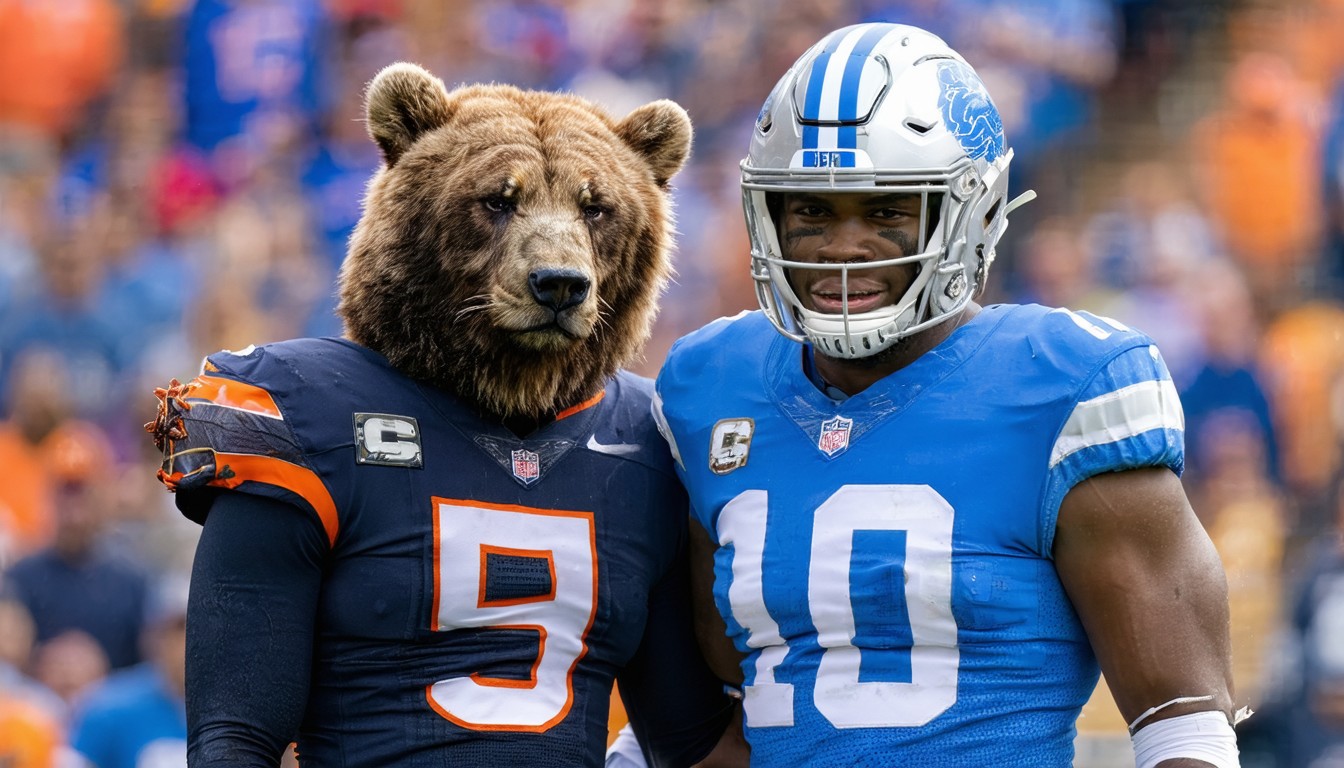
- Bear Advantages: Superior size, muscle mass, thick fur for protection, bone-crushing bite, and powerful swipes.
- Lion Advantages: Greater agility, faster movement, more experience fighting large adversaries (due to pride disputes over territory), potentially more strategic due to social life.
Still, most scenarios—evaluated by modern zoologists—tend to favor the largest bear species over lions in single combat.
Conservation Status and Human Impact
Population Trends and Threats
Both bears and lions have seen substantial population declines in the last century. African lion numbers have dropped sharply due to habitat fragmentation and human conflict, leaving fewer than 20,000 in the wild by some estimates. Large bear populations, like grizzlies and polar bears, face their own perils—shrinking habitats, climate change, and poaching.
Conservation efforts, such as protected areas and anti-poaching programs, seek to halt these declines. Public fascination with apex predators, whether through documentaries or the “bears vs lions” debate, can help raise awareness—but responsible storytelling is crucial.
“Highlighting the strengths and struggles of top predators not only satisfies human curiosity, but also spotlights conservation needs vital for ecosystem balance.”
– Wildlife Conservation Society
Conclusion
When comparing bears and lions, the differences in their evolution, anatomy, and behavior are as fascinating as the hypothetical outcome of a duel. Larger bears hold physical advantages in solitary confrontations, while lions excel as social strategists and agile hunters. Ultimately, the debate reveals more about the wonders of nature’s diversity than any definitive winner. For wildlife advocates and the curious public, the true victory lies in safeguarding both species so their strength and majesty endure.
FAQs
How much stronger is a bear compared to a lion?
A large bear, such as a polar or grizzly, possesses significantly more muscle mass and bite force than an adult male lion. This strength advantage makes bears formidable opponents in direct physical encounters.
Have lions and bears ever fought in the wild?
No documented cases exist of wild lions and wild bears confronting each other, as their natural ranges do not overlap. Historical staged encounters in captivity were reported, but these situations do not accurately reflect natural behavior.
Which animal is more dangerous to humans: bear or lion?
Both animals can be dangerous, but encounters with bears are more frequent in North America, while lion attacks on humans are more common in regions of Africa where their habitats intersect with villages or cattle herders. Individual risk depends on the context and location.
Do lions have any advantages over bears?
Lions excel in agility, teamwork, and strategy due to their social nature. In the wild, lions often rely on pride members to engage large or dangerous prey, which is a distinct advantage over the solitary bear.
Why is the “bears vs lions” debate so popular?
The matchup captures the imagination because it pits two of nature’s most powerful predators against each other, representing raw strength versus tactical prowess. It also provides a lens for discussing animal adaptations and the importance of apex predators in ecosystems.
What roles do bears and lions play in their ecosystems?
Both serve as keystone species, keeping prey populations in balance and shaping their environments. The loss of either animal can disrupt food chains and lead to negative ecological consequences.

